
This year, SAVI did something no Veteran-serving organization wants to do. We paused new intake for the SAVI Transition Incubator℠.
Not because Veterans stopped asking. Because our demand has exceeded our capacity. At our peak, 300 service-members and Veterans were on our waitlist.
Here is why, and what it will take to reopen.
How SAVI’s coaching works today
SAVI’s team is 98 percent volunteer. Our volunteer coaches are skilled, generous people who give their evenings to walk a Veteran through every federal benefit they have earned, over 12 to 15 months. The results speak for themselves: 100 percent of our graduates have been awarded a primary federal benefit (SAVI-reported).
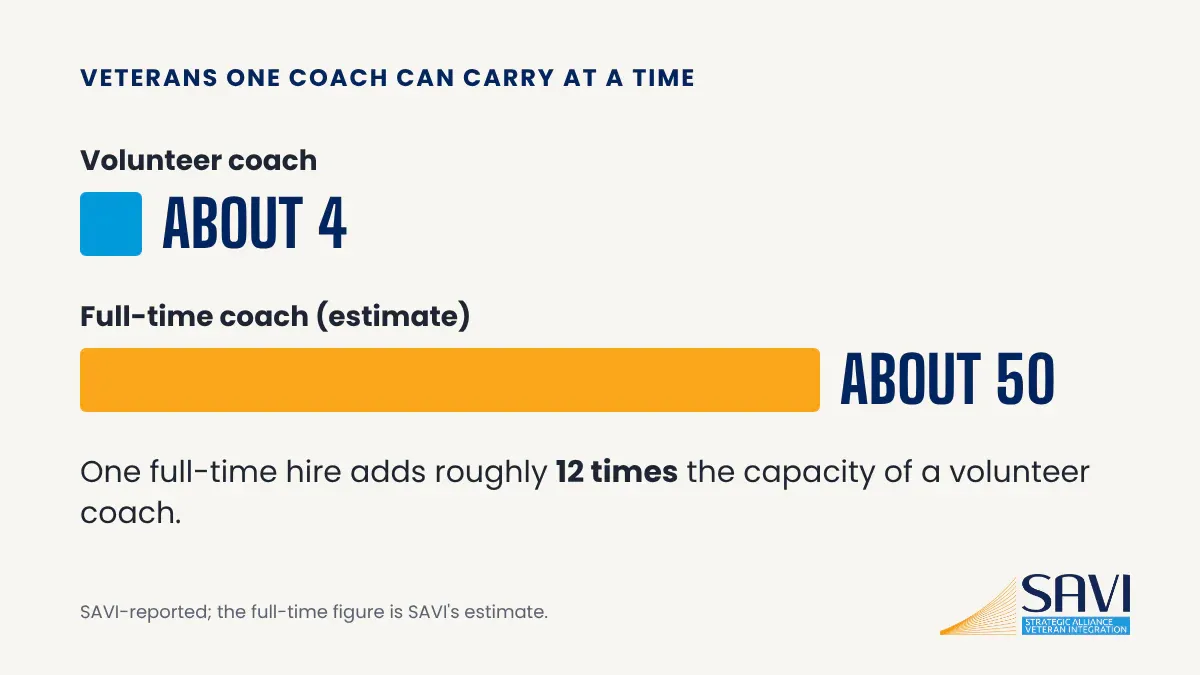
But volunteer time has limits. A volunteer coach can carry about four Veterans at a time. That number is the ceiling on everything else we do.
What one hire changes
We estimate that a full-time coach can carry about 50 Veterans at a time. That is roughly 12 times the capacity of a volunteer coach, from a single position.
One hire would let SAVI reopen intake. It would mean the service-member who reaches out a year before separation gets a coach while there is still time to use every window, instead of a place on a waitlist while those windows close.
That is the whole case, and it is a simple one. The model works. The demand is proven. The constraint has a name, and it is one full-time transition coach.
Why it matters now
About 200,000 service-members leave the military every year, and federal data shows around half of recently separated Veterans wait years to connect with their benefits. Every month SAVI’s intake stays paused is a month some of those Veterans face that system alone.
What you can do
You can be part of reopening the door. A gift of any size supports the coaching that turns earned benefits into received ones.
Support a Veteran’s transition
Next week, on GivingTuesday, we’ll share more about how you can be part of what comes next.
Sources: SAVI program and capacity figures are SAVI-reported; the full-time caseload is SAVI’s estimate. Performance.gov, “Navigating Transition to Civilian Life,” citing Substance Abuse and Mental Health Services Administration data; Department of Defense and Government Accountability Office estimates of annual separations.